
Cooling Challenges of EHV Transformers
Extra-high voltage (EHV) transformers, typically rated at 330kV and above, operate at higher voltages and capacities, generating significantly more heat than conventional transformers. At the same time, EHV transformers have stricter requirements for insulation and thermal management.
The cooling challenges for EHV transformers stem from several factors: higher heat density per unit volume, increased temperature sensitivity of insulation coordination, longer heat dissipation paths due to large dimensions, and higher reliability requirements.
Radiator Design Features for EHV Transformers
EHV transformer radiators require larger cooling surface area and higher heat dissipation efficiency. Multiple radiator banks are typically configured in parallel,配合 forced oil circulation (OFAF) systems to ensure uniform oil flow distribution.
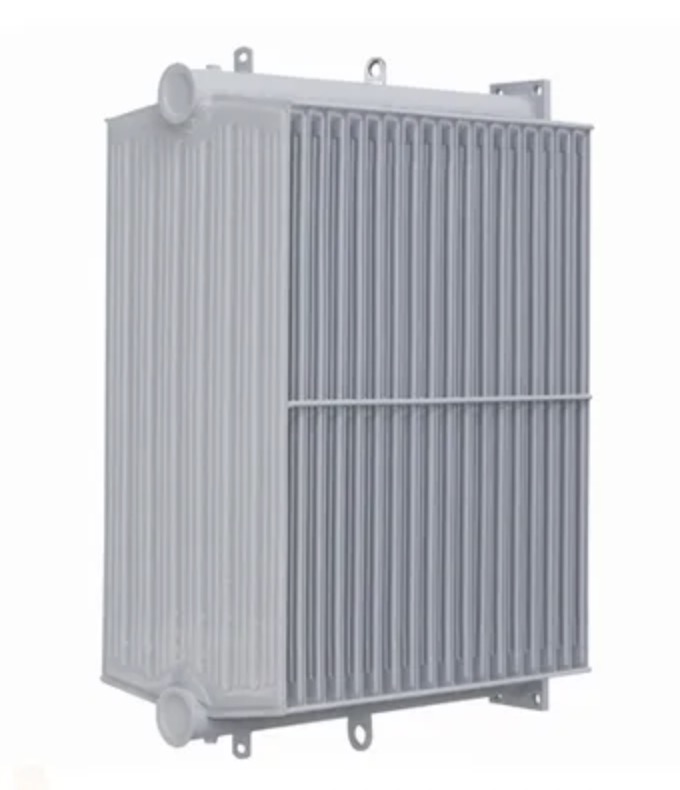
Tengqi Technology has developed dedicated high-capacity plate-type radiators for EHV transformers, using high-strength cold-rolled steel or corrosion-resistant stainless steel with EHV-grade special anti-corrosion coating.
Forced Oil Circulation Systems
EHV transformers typically use forced oil circulation (OFAF) cooling systems. Oil pumps drive transformer oil through radiators at higher flow rates, significantly improving heat transfer efficiency.
Forced oil circulation system design requires special attention to oil flow distribution uniformity, oil pump reliability selection, and system redundancy configuration. Multiple oil pumps are typically configured in parallel.
Redundancy and Reliability
EHV transformer radiator systems typically use N+1 or N+2 redundancy configurations, ensuring transformers can operate at full or reduced load when one or two radiator banks are faulty.
Tengqi Technology EHV radiator products undergo rigorous type testing and long-term operational verification, complying with international standards including IEC, IEEE, and GB.
EHV Cooling System Monitoring and Control
Intelligent monitoring systems are critical for EHV transformer cooling management. The system should monitor key parameters in real time including oil temperature, oil flow, fan status, and oil pump operating parameters.
Modern EHV transformer cooling control systems are typically integrated with substation SCADA systems for remote monitoring and intelligent management.
Conclusion
EHV transformer cooling requires specially designed solutions. With years of experience in EHV radiator design and manufacturing, Tengqi Technology can provide efficient and reliable cooling solutions for all types of EHV transformers.
Need Expert Advice on Transformer Cooling?
Contact our engineering team for professional consultation on transformer radiator selection, maintenance, and custom cooling solutions.
Contact Us →