
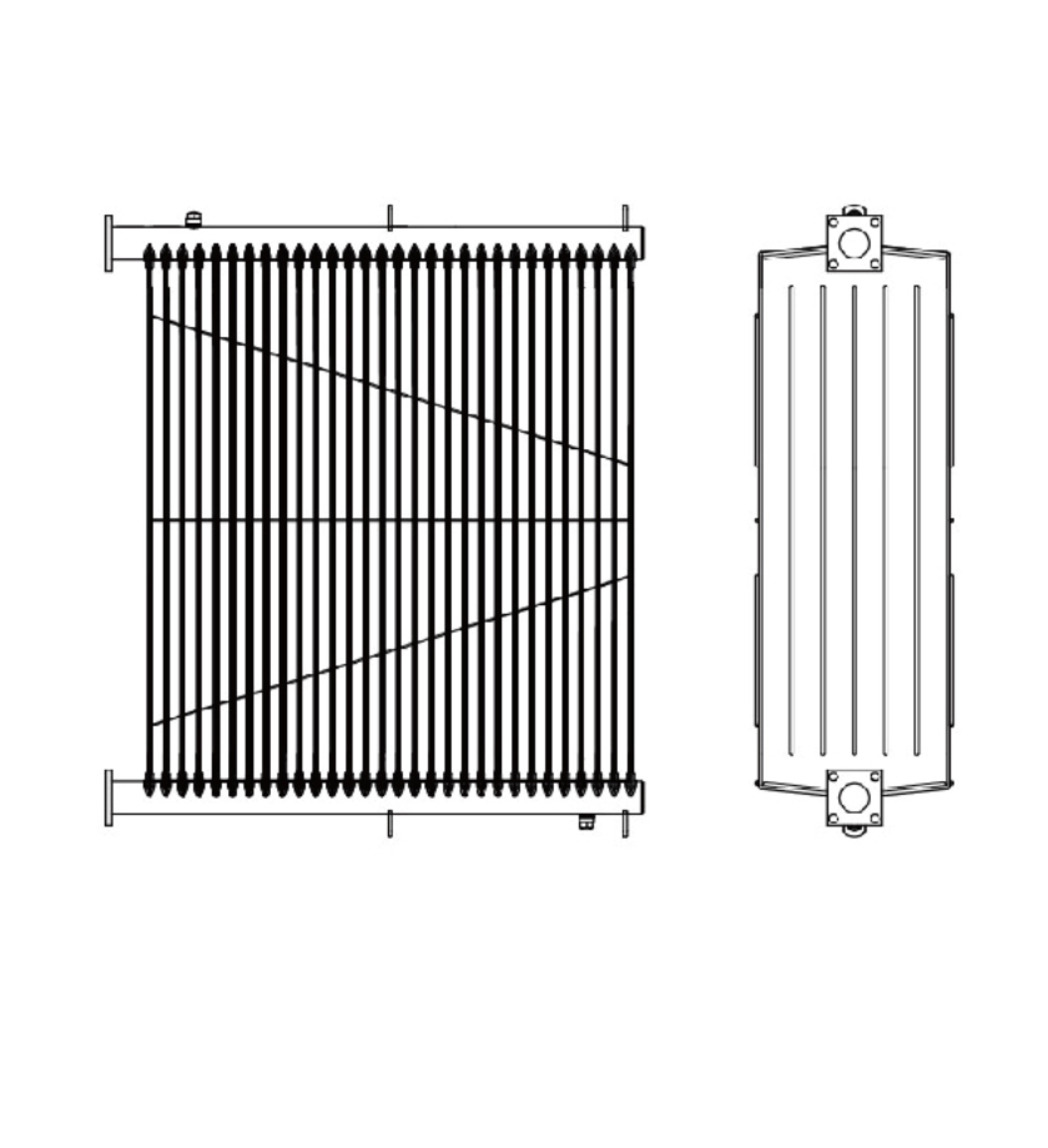
Overview of Radiator Materials
Transformer radiators are manufactured from several materials, each offering different properties in terms of strength, corrosion resistance, thermal conductivity, and cost. The most common materials are cold-rolled steel (CRS), stainless steel, galvanized steel, and aluminum alloys.
Material selection significantly impacts radiator performance, service life, and cost. The optimal choice depends on the operating environment, required service life, budget constraints, and specific project requirements. Understanding the characteristics of each material is essential for informed decision-making.
Cold-Rolled Steel: The Industry Standard
Cold-rolled steel is the most widely used material for transformer radiators, offering an excellent balance of strength, formability, weldability, and cost. Standard CRS radiators with proper coating systems provide reliable service life of 20-30 years in normal environments.
Tengqi Technology uses high-quality CRS with strict chemical composition and mechanical property specifications. The material undergoes rigorous incoming inspection to ensure consistent quality. CRS radiators are suitable for most standard applications including substation, industrial, and commercial installations.
Stainless Steel for Corrosion Resistance
Stainless steel radiators offer superior corrosion resistance, making them ideal for harsh environments including coastal areas, chemical plants, and offshore platforms. Common grades used include 304 and 316L stainless steel, with 316L offering enhanced resistance to chloride corrosion.
While stainless steel radiators cost 50-100% more than CRS alternatives, they offer significantly longer service life in corrosive environments, often exceeding 30 years with minimal maintenance. For critical applications where downtime is extremely costly, stainless steel provides valuable reliability assurance.
Aluminum and Galvanized Steel Alternatives
Aluminum radiators offer excellent thermal conductivity and light weight, making them suitable for applications where weight is a concern, such as mobile or transportable transformers. However, aluminum has lower mechanical strength and requires careful corrosion protection in certain environments.
Galvanized steel radiators provide good corrosion resistance at a moderate cost premium over CRS. The hot-dip galvanizing process creates a robust zinc coating that protects the underlying steel. Galvanized radiators are a popular choice for medium-corrosion environments.
Material Selection Decision Framework
Choosing the right radiator material involves evaluating several factors: environmental corrosivity (coastal, industrial, rural), required service life, budget constraints, weight limitations, and maintenance capability. A structured decision framework helps ensure optimal material selection.
Tengqi Technology provides material selection guidance based on decades of experience across thousands of installations worldwide. Our engineering team considers all relevant factors to recommend the most cost-effective material solution for each application.
Conclusion
Material selection is a critical decision in transformer radiator procurement that affects performance, longevity, and total cost of ownership. By understanding the properties and trade-offs of each material option, buyers can make informed decisions that optimize value for their specific application.
Need Expert Advice on Transformer Cooling?
Contact our engineering team for professional consultation on transformer radiator selection, maintenance, and custom cooling solutions.
Contact Us →