
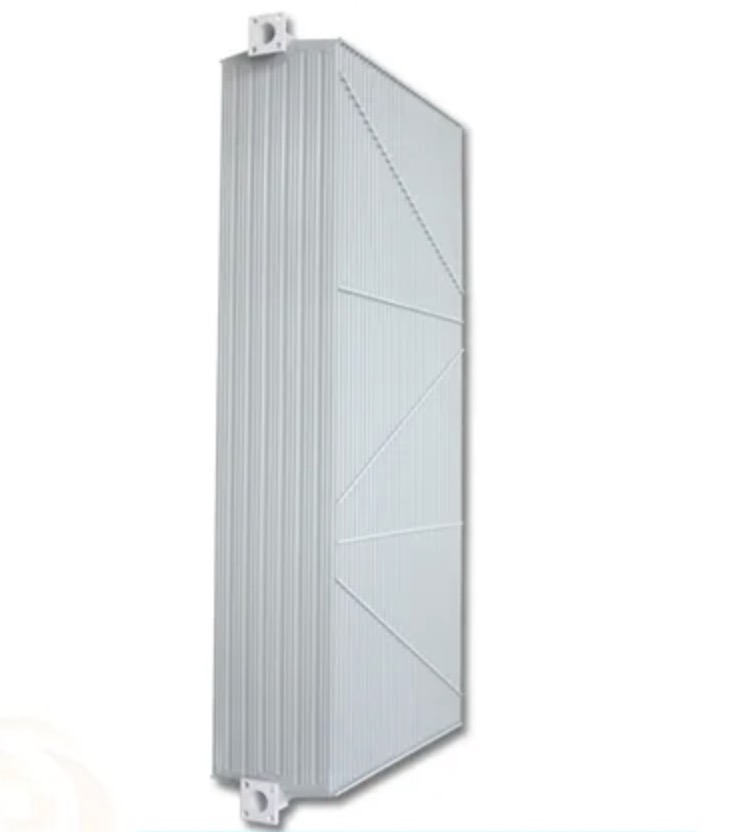
Classification of Transformer Cooling Methods
Transformer cooling methods are classified according to IEC 60076 into several types, the most common being ONAN (Oil Natural Air Natural), ONAF (Oil Natural Air Forced), and OFAF (Oil Forced Air Forced).
Understanding the working principles and performance characteristics of these cooling methods is important for correct transformer selection and safe operation.
ONAN Cooling Method Explained
ONAN is the most basic cooling method, relying on natural convection of hot oil and surrounding air. Its advantages include simple structure, extremely high reliability, no external power requirement, low maintenance cost, and quiet operation.
ONAN cooling capacity mainly depends on radiator surface area and environmental conditions. To meet higher cooling requirements, ONAN transformers typically need larger radiators.
ONAF Cooling Method Explained
ONAF adds forced air cooling on top of natural oil circulation. Fans installed on radiators activate when needed, accelerating airflow over radiator surfaces to improve cooling efficiency. ONAF can increase transformer capacity by 30-50%.
ONAF systems require auxiliary equipment including power supply, control circuits, and fans. At low loads, fans can be turned off for ONAN mode operation, achieving energy savings and noise reduction.
OFAF Cooling Method Explained
OFAF adds oil pumps to forced air cooling, forcing transformer oil circulation. This greatly increases oil flow velocity, significantly improving heat transfer coefficient and achieving the highest cooling efficiency among the three methods.
OFAF systems have the highest initial investment and operating costs, but can significantly reduce radiator size and quantity, offering significant advantages in space-constrained or high-capacity applications.
Technical and Economic Comparison
In terms of technical indicators, OFAF has the highest cooling efficiency, followed by ONAF, with ONAN the lowest. In reliability, ONAN is highest, followed by ONAF, with OFAF the lowest. In operating cost, ONAN is lowest, followed by ONAF, with OFAF the highest.
In actual selection, comprehensive权衡 should be made based on specific application scenarios.
Conclusion
ONAN, ONAF, and OFAF cooling methods each have their characteristics and applicable scenarios. Tengqi Technology offers radiator products适配 all cooling methods, meeting different customer requirements.
Need Expert Advice on Transformer Cooling?
Contact our engineering team for professional consultation on transformer radiator selection, maintenance, and custom cooling solutions.
Contact Us →