
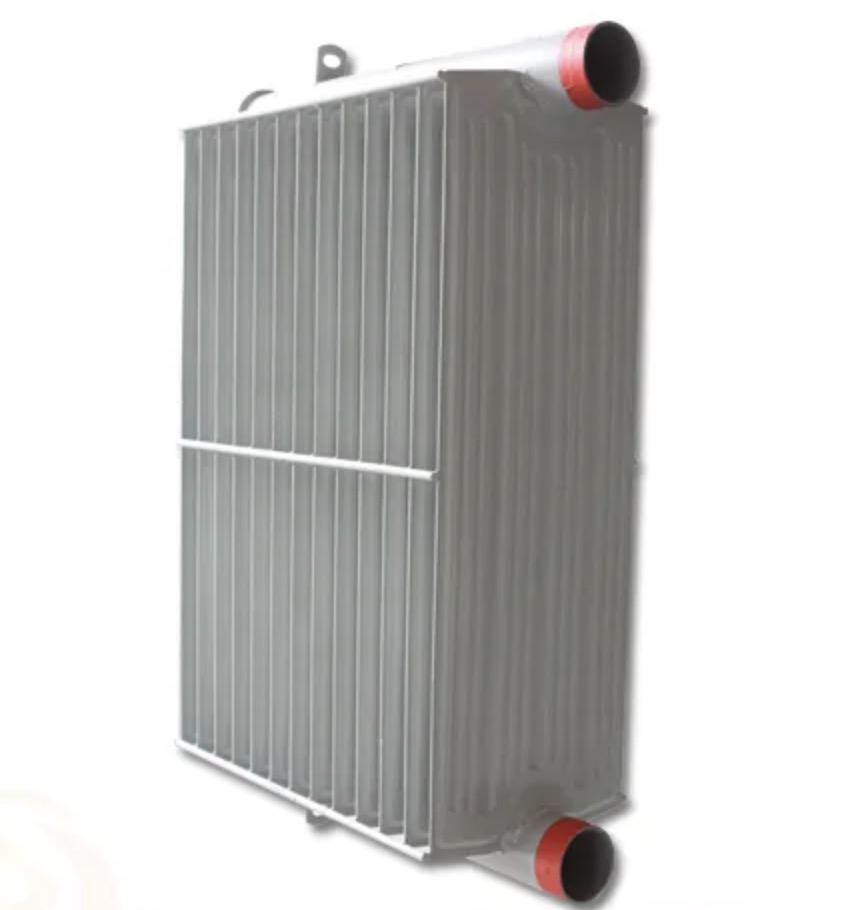
Introduction to Plate and Tube Radiators
Plate-type and tube-type radiators are the two most common types of transformer radiators. Plate-type radiators consist of a series of parallel metal plates with oil flowing through channels between them for heat exchange. Tube-type radiators consist of metal tubes with oil flowing inside, and heat transfers through the tube walls to the surrounding air.
These two radiator types differ significantly in design principles, manufacturing processes, performance characteristics, and application scenarios. Understanding their differences helps select the most suitable radiator type for a given transformer application.
Heat Transfer Performance Comparison
Plate-type radiators generally achieve higher heat transfer efficiency due to their larger surface area and optimized flow channel design. The thin-plate structure creates thin oil layers, reducing thermal resistance and improving heat transfer coefficient. For the same volume and weight, plate-type radiators typically dissipate 15-25% more heat than tube-type radiators.
Tube-type radiators have relatively lower heat transfer efficiency, but the tubular structure offers better mechanical strength capable of withstanding higher oil pressure. Tube-type may be more reliable for high-pressure operation or extreme working conditions.
Manufacturing Process Comparison
Plate-type radiator manufacturing involves steel plate stamping, welding assembly, and surface treatment. Tengqi Technology uses advanced automatic welding and coating production lines to ensure product consistency and quality stability.
Tube-type radiator manufacturing involves tube bending, threading, expanding or welding - processes that are relatively complex with lower automation levels. However, tube-type radiators offer greater flexibility for non-standard designs and special specifications.
Application Scenario Comparison
Plate-type radiators are widely used in various power and distribution transformers, particularly suitable for ONAN and ONAF cooling methods. Their compact structure and efficient heat dissipation make them ideal for space-constrained scenarios like urban substations, industrial plants, and commercial buildings.
Tube-type radiators still have their place in special applications such as transformers requiring high pressure resistance or replacement repairs for older transformers.
Cost and Maintenance Comparison
Plate-type radiators benefit from higher automation levels, resulting in lower costs for batch production. Maintenance is also relatively convenient with easier surface cleaning. Tube-type radiators typically have higher manufacturing costs and tube cleaning is more difficult.
Plate-type radiator fins are thinner and more susceptible to deformation from impact. Tube-type radiators are more robust and durable. Selection should综合考虑 the installation environment and operating conditions.
Conclusion
Both plate-type and tube-type radiators have their advantages. Plate-type radiators are market leaders with efficient heat transfer and compact structure. Tube-type radiators retain unique value in extreme conditions and special applications. Tengqi Technology offers both types and can provide optimal solutions based on customer requirements.
Need Expert Advice on Transformer Cooling?
Contact our engineering team for professional consultation on transformer radiator selection, maintenance, and custom cooling solutions.
Contact Us →