
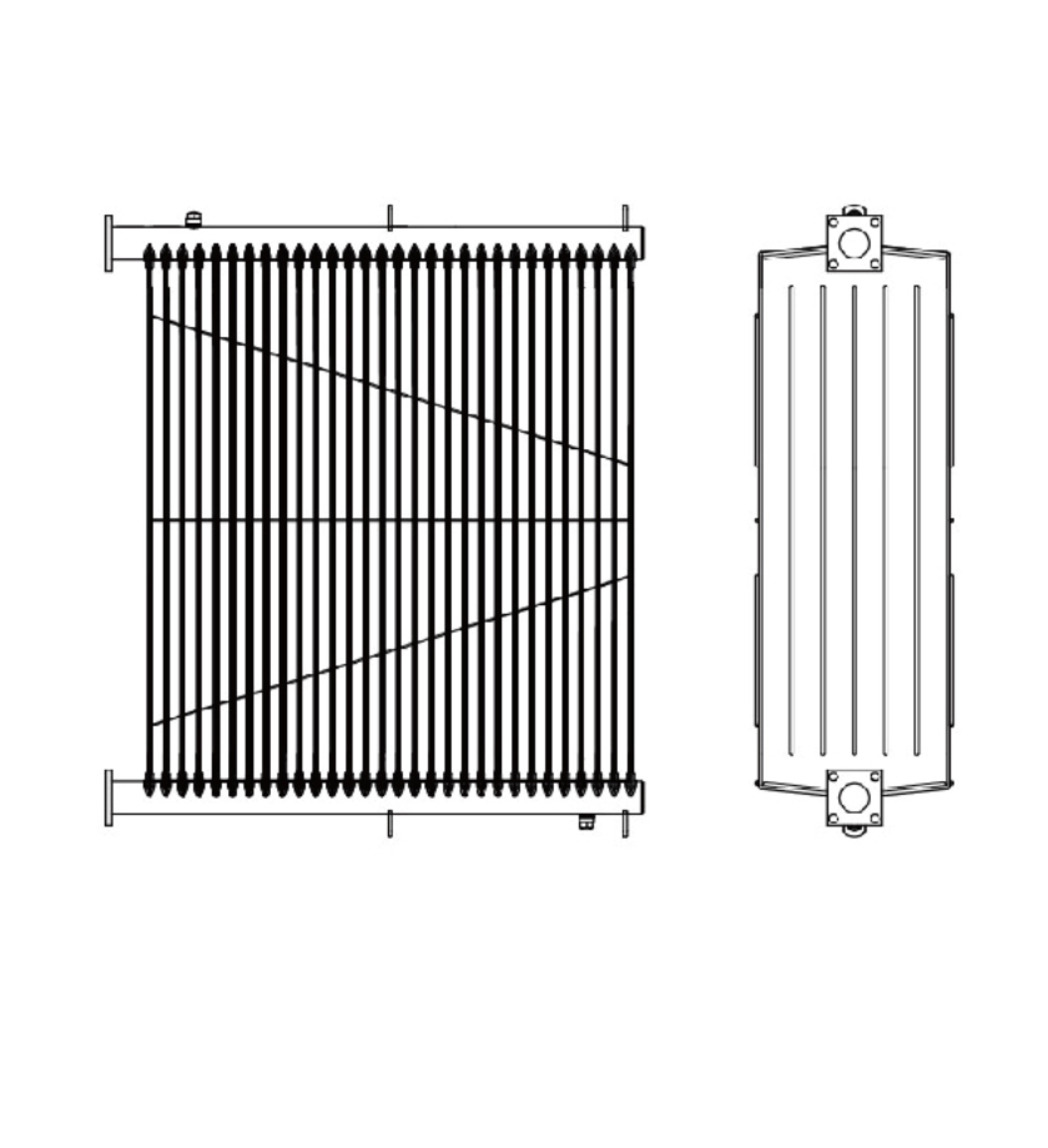
Sources of Transformer Radiator Noise
Transformer radiators generate noise through multiple mechanisms. The primary sources include oil flow turbulence within the radiator channels, fan operation noise in forced air cooling systems, and structural vibration transmitted from the transformer core and windings.
Understanding these noise sources is essential for developing effective noise control strategies. Noise levels typically increase with transformer capacity and cooling requirements, making this particularly important for large power transformers and EHV transformers.
Oil Flow Noise Reduction
Oil flow noise is caused by turbulence as oil passes through radiator channels and connecting pipes. This noise can be reduced by optimizing oil flow path design, using larger diameter pipes to reduce flow velocity, and incorporating flow smoothing devices at inlet and outlet connections.
Tengqi Technology radiator designs incorporate optimized flow channel geometry to minimize turbulence while maintaining high heat transfer efficiency. This dual optimization approach delivers quieter operation without compromising cooling performance.
Fan Noise Control for ONAF Systems
For forced air cooling (ONAF/OFAF) systems, fan noise is often the dominant noise source. Key strategies include selecting low-noise fan designs, optimizing fan speed control with variable frequency drives, using sound-absorbing fan shrouds, and implementing intelligent fan operation scheduling.
Modern noise control approaches use temperature-based variable speed control to match cooling output to actual demand. At low load conditions, fans operate at reduced speed or turn off completely, significantly reducing noise levels during nighttime and low-demand periods.
Structural Vibration Isolation
Structural vibration from the transformer core and windings can transmit through connections to the radiator panels, causing them to radiate noise effectively. Installing flexible connections at radiator-to-tank interfaces, using vibration-dampening mounting brackets, and applying constrained layer damping treatment to radiator panels can significantly reduce this noise.
Tengqi Technology offers customized vibration isolation solutions for noise-sensitive installations including urban substations, residential areas, and hospital complexes. Our engineering team can assess specific noise requirements and design appropriate mitigation measures.
Conclusion
Effective transformer radiator noise control requires a comprehensive approach addressing oil flow, fan operation, and structural vibration. By implementing appropriate noise reduction strategies, transformers can meet stringent environmental noise regulations while maintaining optimal cooling performance.
Need Expert Advice on Transformer Cooling?
Contact our engineering team for professional consultation on transformer radiator selection, maintenance, and custom cooling solutions.
Contact Us →