
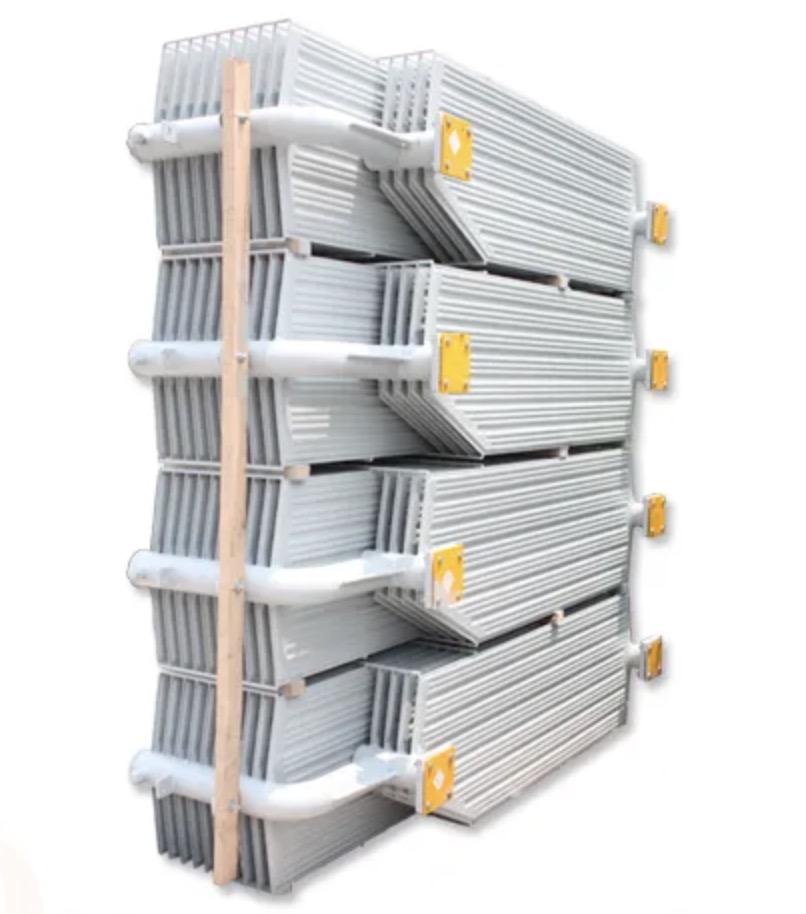
Preparing Radiators for Transportation
Proper preparation is essential for safe transformer radiator transportation. Radiators should be securely packaged with adequate cushioning to prevent panel deformation, fin damage, and coating scratches. All openings must be sealed to prevent moisture and contaminant ingress during transit.
Tengqi Technology uses custom-designed packaging for each radiator specification, combining wooden crates, foam cushioning, and protective wrapping. Each package is clearly labeled with handling instructions, weight, dimensions, and destination information for proper logistics handling.
Loading, Securing, and Unloading
Proper loading and securing procedures prevent in-transit damage. Radiators should be transported in an upright orientation whenever possible. If horizontal transport is necessary, adequate support must be provided to prevent panel distortion. Securing straps should be placed at reinforced points to avoid panel damage.
Unloading requires appropriate lifting equipment with sufficient capacity. Crane lifting should use spreader bars to distribute load evenly across multiple lifting points. Forklift handling requires proper pad placement to distribute weight and prevent fin damage.
On-Site Installation Procedures
Installation begins with visual inspection to document any shipping damage. The mounting structure should be verified for correct dimensions, levelness, and adequate strength. Connection points must be cleaned and prepared, with new gaskets used for flange connections.
For multi-bank installations, radiators should be installed progressively, verifying alignment and connection fit before final tightening. All connections should be torqued to manufacturer specifications. After installation, the system should be filled with oil and checked for leaks before transformer commissioning.
Post-Installation Testing and Commissioning
After installation, comprehensive testing confirms proper operation. This includes pressure testing the complete cooling circuit, checking all flange and pipe connections for leaks, verifying fan and pump operation and rotation direction, testing control system functionality, and measuring oil flow rates across radiator banks.
Tengqi Technology provides detailed installation and commissioning documentation with each shipment. Our technical support team is available for remote guidance or on-site assistance for complex installations, ensuring proper setup and optimal performance from day one.
Conclusion
Proper transportation and installation procedures are essential for ensuring transformer radiators arrive in perfect condition and perform as designed. Following manufacturer guidelines and industry best practices minimizes risk and maximizes radiator service life.
Need Expert Advice on Transformer Cooling?
Contact our engineering team for professional consultation on transformer radiator selection, maintenance, and custom cooling solutions.
Contact Us →